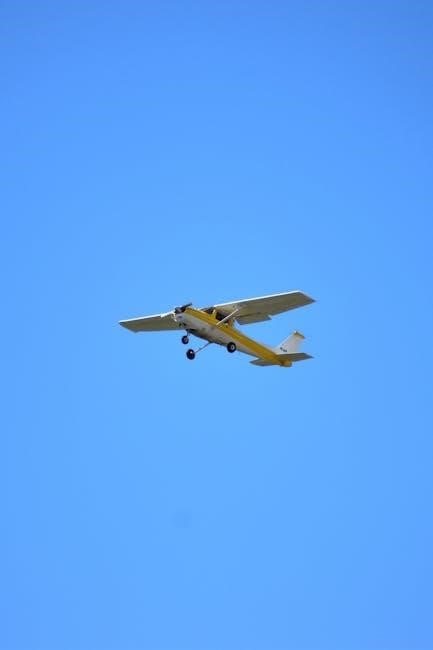
Cessna 172S Pilot Operating Handbook (POH) ౼ A Comprehensive Guide
The Cessna 172S POH is a vital document, offering detailed operational guidance, performance data, and system specifics for safe and efficient flight operations.
Understanding the Importance of the POH
The Pilot Operating Handbook (POH) for the Cessna 172S is arguably the most crucial document a pilot possesses. It’s a comprehensive resource, meticulously crafted by the manufacturer, detailing everything needed for the safe and efficient operation of the aircraft.
This isn’t merely a suggestion manual; it defines the limits and procedures for the specific aircraft.
Understanding the POH ensures pilots operate within approved parameters, maximizing safety and performance.
It covers normal, abnormal, and emergency procedures, weight and balance calculations, and detailed system descriptions – all essential for informed decision-making during every phase of flight. Ignoring the POH is a serious breach of pilot responsibility.
POH Sections: A Detailed Overview
The Cessna 172S POH is logically structured for quick access to critical information. Key sections begin with limitations – airspeed, weight, and altitude boundaries – defining safe operating envelopes.
Following this are detailed emergency procedures, outlining responses to engine failures, stalls, and forced landings.
Normal procedures cover preflight, start-up, takeoff, and landing.
Performance charts provide vital data for flight planning, including takeoff/landing distances and climb rates.
Weight and balance calculations ensure the aircraft remains within safe limits, and system descriptions explain aircraft functionality.
Normal Procedures
The Cessna 172S POH’s “Normal Procedures” section details routine operations for safe flight. It begins with a comprehensive preflight inspection checklist, ensuring all systems are functioning correctly before each flight.
Detailed engine start-up procedures outline the correct sequence for ignition and warm-up.
Takeoff procedures specify speeds, flap settings, and control techniques for optimal performance.
These procedures are crucial for consistent and predictable handling, promoting safe and efficient operation of the aircraft under standard conditions.
Preflight Inspection Checklist
The Cessna 172S POH’s preflight checklist is a systematic examination of the aircraft before each flight. It covers the airframe, including control surfaces, fuel tanks, and landing gear, ensuring structural integrity.
Engine checks verify oil levels, coolant, and proper operation of accessories.
The checklist also includes a thorough inspection of flight controls, instruments, and avionics.
Adhering to this checklist is paramount for identifying potential issues and ensuring a safe and airworthy condition before takeoff, minimizing risks during flight.
Engine Start-Up Procedures
The Cessna 172S POH details a precise engine start-up sequence for reliable operation. This begins with verifying fuel selector position, mixture rich, and propeller area clear.
The master switch and boost pump are activated, followed by engaging the starter.
Monitoring oil pressure is crucial during start-up, ensuring adequate lubrication.
After engine start, a magneto check confirms proper ignition system function.
Following these procedures, as outlined in the POH, guarantees a smooth and safe engine start, preventing potential issues during taxi and flight.
Takeoff Procedures
The Cessna 172S POH meticulously outlines takeoff procedures for optimal performance and safety. This includes verifying flight controls are free and correct, setting flaps according to wind conditions, and applying smooth, full power.
Maintaining directional control with rudder is vital during the takeoff roll.
Rotation speed is specified based on weight and configuration.
The POH provides climb speeds and procedures post-takeoff.
Adhering to these guidelines, detailed within the POH, ensures a controlled and efficient takeoff, maximizing safety and minimizing risks.
Emergency Procedures
The Cessna 172S POH dedicates a crucial section to emergency procedures, providing pilots with step-by-step guidance for handling various abnormal situations. This encompasses engine failures, system malfunctions, and unexpected events during flight.
Detailed checklists are provided for immediate action items, prioritizing aircraft control and passenger safety.
The POH outlines procedures for forced landings, stall recovery, and other critical scenarios.
Pilots must thoroughly familiarize themselves with these procedures to react effectively and mitigate risks during emergencies.
Engine Failure During Takeoff
The Cessna 172S POH provides specific procedures for engine failure occurring during the takeoff roll or initial climb. Immediate actions prioritize maintaining directional control using rudder and brakes, while assessing airspeed and remaining runway length.
The checklist details steps for securing the engine, establishing best glide speed, and selecting a suitable landing area.
Pilots are instructed to avoid abrupt maneuvers and maintain coordinated flight.
The POH emphasizes the importance of prompt decision-making and execution of emergency procedures to minimize risks associated with this critical phase of flight.
Forced Landing Procedures

The Cessna 172S POH meticulously outlines procedures for forced landings due to various emergencies. Pilots are guided through selecting a suitable landing site, considering terrain, wind, and obstacles.
Checklists detail securing the aircraft, configuring flaps, and transmitting a Mayday call with position and nature of the emergency.
The POH stresses maintaining airspeed control and a stabilized approach.
Specific techniques for landing in different field types (e.g., plowed, soft) are provided, emphasizing minimizing impact speed and maximizing survivability.
Stall Recovery Techniques
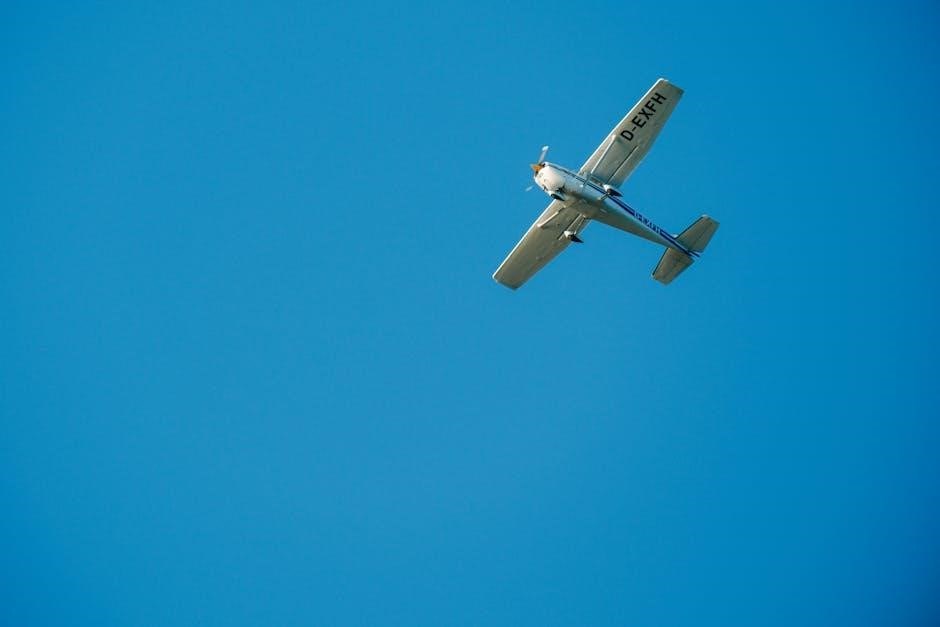
The Cessna 172S POH provides detailed stall recovery procedures crucial for pilot proficiency and safety. It emphasizes recognizing the signs of an impending stall – mushy controls, stall warning horn – and initiating prompt corrective action.
The recommended recovery technique involves immediately decreasing the angle of attack by pushing the control column forward.
Simultaneously, applying power to break the stall and smoothly returning to level flight is detailed.
The POH cautions against abrupt control inputs and stresses maintaining coordinated flight throughout the recovery process.

Performance Data
The Cessna 172S Pilot Operating Handbook (POH) contains critical performance charts and tables essential for flight planning and safe operation. These include detailed takeoff and landing distance calculations, factoring in variables like weight, altitude, and runway conditions.
Climb performance charts illustrate rates of climb at various airspeeds and weights.
Cruise performance charts outline true airspeed, groundspeed, and fuel consumption at different altitudes and power settings.
Pilots utilize this data to accurately predict aircraft performance and ensure operational limitations aren’t exceeded.
Takeoff and Landing Distances
The Cessna 172S POH provides crucial takeoff and landing distance data, vital for determining runway requirements before each flight. These calculations are presented in chart form, accounting for factors like aircraft weight, temperature, altitude, and runway surface conditions.
Pilots must carefully consult these charts to ensure sufficient runway length is available.
Data includes distances to clear obstacles of specific heights, and distances required for a normal landing. Accurate assessment prevents exceeding aircraft limitations and ensures safe operations.
Climb Performance Charts
The Cessna 172S Pilot Operating Handbook features detailed climb performance charts, essential for flight planning and enroute decision-making. These charts illustrate rates of climb at various airspeeds and altitudes, considering factors like weight and temperature.
Pilots utilize these charts to determine optimal climb speeds for maximizing altitude gain and obstacle clearance.
Understanding climb gradients is crucial for navigating terrain and ensuring sufficient performance during ascent, contributing to a safe and efficient flight profile.
Cruise Performance Charts
The Cessna 172S POH provides comprehensive cruise performance charts, vital for accurate flight planning and fuel management. These charts detail true airspeed, groundspeed, fuel consumption, and endurance at different altitudes and power settings.
Pilots use these charts to calculate estimated time enroute, fuel required, and optimal cruise altitudes for maximizing efficiency.
Understanding these parameters allows for informed decisions regarding flight profiles, ensuring safe and economical operation throughout the cruise phase of flight.
Weight and Balance
The Cessna 172S Pilot Operating Handbook dedicates a crucial section to weight and balance calculations, essential for safe flight operations. Proper weight and balance ensures the aircraft remains within its certified limits, maintaining stability and control.
The POH outlines procedures for determining the aircraft’s empty weight and center of gravity, alongside detailed instructions for calculating these parameters with varying payloads.
Understanding the effects of weight distribution on flight characteristics is paramount for all pilots.
Calculating Weight and Balance
The Cessna 172S POH provides a step-by-step guide for accurately calculating weight and balance. Pilots must meticulously determine the weight of all items onboard – including fuel, baggage, and passengers – and their respective moments (weight multiplied by distance from the datum).
These individual moments are then summed to find the total aircraft moment.
Dividing the total moment by the total weight yields the aircraft’s center of gravity (CG) location, which must fall within the specified limits outlined in the POH.
Effects of Weight and Balance on Flight Characteristics
The Cessna 172S POH details how weight and balance significantly impact flight performance and stability. A forward CG generally increases stability but reduces maneuverability and can lead to higher stall speeds. Conversely, an aft CG enhances maneuverability but decreases stability, potentially causing control difficulties.
Exceeding weight limits degrades performance, increasing takeoff and landing distances.
The POH’s charts illustrate these effects, emphasizing the importance of maintaining the CG within prescribed limits for safe operation.
Systems Descriptions
The Cessna 172S Pilot Operating Handbook provides comprehensive details regarding the aircraft’s core systems. This includes a thorough overview of the fuel system, outlining tank capacities, fuel selection procedures, and fuel quantity gauging.
The electrical system description covers battery specifications, alternator functionality, and circuit breaker locations.
Furthermore, the POH details the flight control system, explaining the operation of ailerons, elevators, rudder, and flaps, ensuring pilots understand how these components influence aircraft control.
Fuel System Overview
The Cessna 172S fuel system, as detailed in the POH, consists of two integral wing tanks with a total capacity of 50 gallons usable. Fuel selection is managed via a three-position selector valve – Left, Right, and Both.
The POH emphasizes proper fuel management procedures, including switching tanks periodically to maintain balance.
Fuel quantity is indicated by capacitance fuel gauges, and pilots are cautioned about potential inaccuracies, especially during maneuvers. A fuel strainer protects the engine from contaminants.
Electrical System Overview
The Cessna 172S electrical system, as outlined in the POH, is a 12-volt DC negative ground system powered by an engine-driven alternator and a 40-amp hour battery. The system supplies power to avionics, lights, and other electrical equipment.
Circuit breakers protect the various circuits from overloads.
The POH details emergency procedures for electrical failures, including battery operation and alternator shutdown. Pilots must understand the system’s limitations and proper usage to ensure safe operation.
Flight Control System Overview
The Cessna 172S utilizes a conventional flight control system, detailed within the POH, employing control surfaces—ailerons, elevator, and rudder—for maneuvering. These are mechanically linked to the control yoke and rudder pedals within the cockpit.
The POH emphasizes proper control input and trim usage for smooth and coordinated flight.
Flaps, electrically operated, modify wing lift for takeoff and landing. Understanding the system’s operation, limitations, and associated emergency procedures is crucial for safe flight.
Limitations
The Cessna 172S Pilot Operating Handbook (POH) meticulously outlines critical operational limitations ensuring safe flight parameters. These encompass airspeed restrictions – including maneuvering, flap extended, and never-exceed speeds – vital for structural integrity.
Weight limitations, covering maximum takeoff and landing weights, are crucial for performance and control.
Altitude limitations, pertaining to oxygen usage and operational ceilings, are also detailed. Adherence to these limits, as defined in the POH, is paramount for safe and legal operation.
Airspeed Limitations
The Cessna 172S POH specifies critical airspeed limitations for safe operation. The maneuvering speed (Va) prevents excessive loads during abrupt control inputs, typically around 85 KIAS.
Flap extended speed (Vfe) – usually 85 KIAS – protects the flaps during operation.
Never-exceed speed (Vne) – around 163 KIAS – safeguards the aircraft’s structural integrity.
Stall speeds (Vs) vary with configuration; understanding these speeds is vital for avoiding stalls. Strict adherence to these limits, detailed within the POH, is essential.
Weight Limitations
The Cessna 172S POH outlines crucial weight restrictions for safe flight. Maximum takeoff weight (MTOW) – typically 2,450 lbs – defines the heaviest permissible weight for takeoff.
Maximum landing weight is usually lower, around 2,200 lbs, to ensure safe landings.
Empty weight and useful load are also specified, impacting payload capacity.
Exceeding these limits compromises stability, control, and structural integrity.
Careful weight and balance calculations, as detailed in the POH, are paramount for safe operation.
Altitude Limitations
The Cessna 172S POH specifies altitude restrictions for optimal performance and safety. Service ceiling, typically around 12,500 feet, indicates the maximum altitude for sustained climb.
Density altitude calculations, crucial for performance assessment, are detailed within.
Operation at high altitudes requires understanding reduced engine power and aerodynamic efficiency.
The POH outlines performance charts for various altitudes and temperatures.
Pilots must adhere to these limitations to maintain control and ensure safe flight within the aircraft’s capabilities.