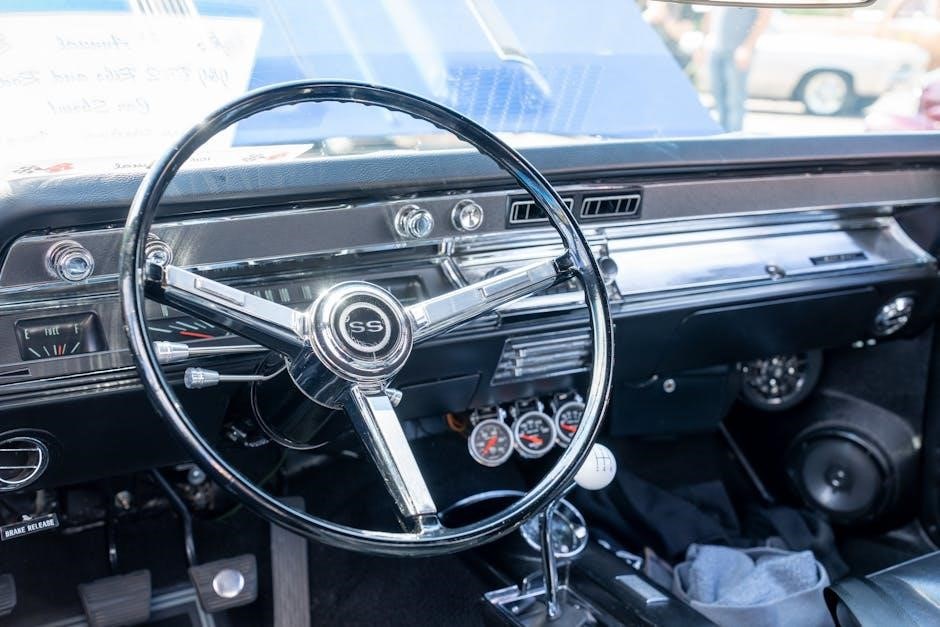
Six-speed manual transmissions, increasingly common since the late 1990s, offer a balance of performance and efficiency. They represent a significant
evolution in drivetrain technology, providing drivers with greater control and a more engaging experience.
These transmissions are favored for both track and street use, allowing for optimized gear ratios for various driving conditions.
Historical Development of Manual Transmissions
Early manual transmissions were simple, often featuring three or four forward gears. These systems emerged alongside the development of the automobile itself, initially requiring significant driver skill. As automotive technology progressed, so did transmission complexity. The four-speed manual became dominant for much of the 20th century, offering a good compromise between simplicity and usability.
However, the demand for improved fuel economy and performance spurred innovation. The five-speed manual arrived, providing a closer gear ratio spread. By the late 1990s, manufacturers began introducing six-speed manual transmissions, initially in sports cars and performance vehicles. This shift allowed for even finer control over engine RPM and a wider range of driving scenarios.
The evolution reflects a continuous pursuit of efficiency and driver engagement, culminating in the sophisticated 6-speed systems we see today.
The Rise of the 6-Speed Configuration
The adoption of the 6-speed manual wasn’t immediate, but gained momentum as manufacturers sought to address evolving consumer demands. Initially, it was favored in performance applications where precise gear selection was crucial for maximizing track performance and driver control. The ability to install lower rear-axle-gear ratios, while maintaining comfortable highway cruising, was a key advantage.
As technology matured and production costs decreased, the 6-speed configuration began appearing in a wider range of vehicles. This expansion coincided with a growing emphasis on fuel efficiency, as the additional gear allowed engines to operate more consistently within their optimal RPM range.
Ultimately, the 6-speed’s blend of performance, efficiency, and driver engagement cemented its place in the automotive landscape.
Core Components of a 6-Speed Manual Transmission
Essential components include gear sets with specific ratios, synchronizers for smooth shifting, and robust shift forks and linkages. These elements work in harmony to deliver power efficiently.
Gear Sets and Ratios
Gear sets within a 6-speed manual transmission are meticulously designed to provide a wide spectrum of ratios, optimizing engine performance across diverse driving scenarios. Lower gears deliver increased torque for rapid acceleration, while higher gears facilitate efficient cruising at highway speeds.
The specific ratios are carefully calculated based on the vehicle’s engine characteristics, intended use, and rear axle gear ratio. A 6-speed configuration allows for closer ratio spacing, keeping the engine within its optimal power band more frequently. This results in improved responsiveness and a more engaging driving experience. Double overdrive gears, like those found in the TREMEC Magnum, are particularly beneficial for highway driving, reducing engine RPM and enhancing fuel economy.
Synchronizers and Their Function
Synchronizers are critical components within a 6-speed manual transmission, enabling smooth and precise gear changes. Their primary function is to equalize the rotational speeds of the gear being engaged and the main shaft before the clutch fully engages. This prevents grinding and jarring during shifts.
Modern synchronizers typically employ friction materials and a conical shape to achieve speed matching. As the shift lever is moved, the synchronizer sleeve slides along the gear, applying friction to bring the speeds into harmony. A well-maintained synchronizer system is essential for a pleasant driving experience, minimizing wear and tear on the transmission components and ensuring reliable operation.
Shift Forks and Linkages
Shift forks are the mechanical intermediaries that translate driver input into gear selection within a 6-speed manual transmission. These forks engage with the synchronizer sleeves, moving them along the splined shafts to select the desired gear. They are robustly constructed to withstand the forces involved in shifting.
Linkages – whether cable or direct – connect the shift lever in the cabin to the shift forks inside the transmission. Precise linkage geometry is crucial for accurate and effortless gear changes. Worn or misadjusted linkages can result in sloppy shifting or difficulty selecting certain gears. Maintaining proper linkage adjustment is vital for optimal transmission performance and driver satisfaction.
Advantages of a 6-Speed Manual Transmission
Six-speed manuals deliver improved fuel efficiency, enhanced performance, and a wider gear ratio spread. This allows for optimized engine operation and a more engaging driving experience.
Improved Fuel Efficiency
A key advantage of the 6-speed manual transmission lies in its ability to optimize engine RPMs for various driving scenarios, directly contributing to improved fuel efficiency. The closer gear ratios allow the engine to consistently operate within its most efficient range, reducing wasted energy.
Compared to transmissions with fewer gears, a 6-speed allows drivers to maintain lower engine speeds during highway cruising, significantly reducing fuel consumption. The double overdrive feature, particularly beneficial in performance applications, further enhances this efficiency by allowing for even lower RPMs at higher speeds. This translates to fewer trips to the gas station and a reduced environmental impact.
By keeping the engine operating in its sweet spot, the 6-speed manual maximizes fuel economy without sacrificing performance when needed.
Enhanced Performance and Acceleration
The 6-speed manual transmission delivers enhanced performance and acceleration through its ability to keep the engine within its optimal power band. Closer gear ratios mean less disruption to the engine’s power delivery during shifts, resulting in quicker acceleration times.
For track applications, like autocrossing, the 6-speed allows for precise gear selection, maximizing power output and minimizing wheelspin. The ability to install lower rear-axle gear ratios, facilitated by the double overdrive, further boosts acceleration. This configuration allows drivers to launch harder and maintain momentum through corners.
Ultimately, the 6-speed manual provides a more responsive and engaging driving experience, translating to improved performance on both the street and the track.
Wider Gear Ratio Spread
A key advantage of the 6-speed manual transmission is its wider gear ratio spread. This expanded range provides both improved acceleration and enhanced cruising efficiency. The additional gear allows for closer ratios, optimizing engine performance across a broader spectrum of speeds;
Specifically, the double overdrive configuration enables the use of lower rear-axle gear ratios. This setup enhances performance on the track while simultaneously reducing engine RPM at highway speeds, leading to better fuel economy. This versatility is crucial for vehicles intended for dual-purpose use – both spirited driving and comfortable long-distance travel.
The wider spread contributes to a more refined and adaptable driving experience.

Comparison with Other Manual Transmission Types
Compared to older designs, 6-speed manuals offer noticeable improvements. Five-speeds are adequate, but 6-speeds provide more refined control, while surpassing 3 and 4-speed options.
6-Speed vs. 5-Speed Manuals
The debate between 5 and 6-speed manuals often centers on practicality versus performance. While a 5-speed is often sufficient for daily driving, a 6-speed provides a closer ratio spread, enhancing acceleration and allowing for more precise gear selection.
This closer spacing between gears keeps the engine operating within its optimal power band more frequently. For enthusiasts who enjoy spirited driving or track days, the 6-speed’s double overdrive is a significant advantage, enabling lower engine RPMs at highway speeds while maintaining responsiveness.
However, some argue that the 6-speed necessitates more frequent shifting, potentially detracting from the driving experience. Ultimately, the best choice depends on individual driving style and the vehicle’s intended use.
6-Speed vs. 4-Speed Manuals
Comparing a 6-speed to a 4-speed manual reveals a substantial leap in transmission technology. Four-speed manuals, common in older vehicles, offer simplicity but lack the refinement and versatility of their 6-speed counterparts.
The wider gear ratio spread of a 6-speed allows for both improved acceleration from a standstill and better fuel efficiency at cruising speeds. A 4-speed typically compromises, offering larger jumps between gears that can result in less optimal engine operation.
While a 4-speed might suffice for basic transportation, the 6-speed delivers a more engaging and efficient driving experience, particularly beneficial for performance applications and modern driving demands.
6-Speed vs. 3-Speed Manuals
The contrast between a 6-speed and a 3-speed manual transmission is stark, representing decades of automotive engineering progress. Three-speed manuals, found in vintage cars, prioritize simplicity and durability over performance and efficiency.
A 6-speed offers significantly closer gear ratios, enabling the engine to remain within its optimal power band more consistently. This translates to quicker acceleration, improved fuel economy, and reduced engine strain. The larger gaps in a 3-speed’s gearing often leave the engine feeling underpowered or over-revved.
Essentially, the 6-speed provides a far more refined and versatile driving experience, while the 3-speed serves as a relic of a simpler automotive era.

Applications of 6-Speed Manual Transmissions
Six-speed manuals excel in sports cars, performance vehicles, trucks, and SUVs, offering enhanced control and efficiency. They provide optimal gearing for diverse driving scenarios.
Sports Cars and Performance Vehicles
Six-speed manual transmissions are a staple in the realm of sports cars and high-performance vehicles, offering a direct connection between driver and machine. This configuration allows for precise gear selection, maximizing acceleration and control on both the track and winding roads.
The double overdrive feature, as seen in TREMEC’s Magnum 6-speed, is particularly beneficial. It enables the use of lower rear-axle gear ratios for improved track performance while maintaining comfortable highway cruising speeds with reduced engine RPM. This versatility is crucial for vehicles intended for dual-purpose use – spirited driving and daily commutes.
Enthusiasts often choose these transmissions for their ability to enhance the driving experience, providing a more engaging and rewarding feel compared to automatic alternatives. The precise control offered by a six-speed manual allows drivers to fully exploit the vehicle’s power and handling capabilities.
Trucks and SUVs
Six-speed manual transmissions, while less common than in sports cars, offer distinct advantages for trucks and SUVs. They provide enhanced control when towing, hauling heavy loads, or navigating challenging off-road terrain. The wider gear ratio spread allows for optimal engine braking, improving safety and reducing wear on the vehicle’s braking system during descents.
The ability to select precise gears is particularly valuable in situations demanding low-speed torque, such as rock crawling or steep inclines. A well-chosen six-speed manual can significantly improve a truck or SUV’s capability and versatility.
Furthermore, the Magnum 6-speed’s double overdrive can contribute to improved fuel efficiency during highway driving, a benefit appreciated by owners who frequently cover long distances.
Passenger Cars
Six-speed manual transmissions in passenger cars deliver a refined driving experience, blending performance with efficiency. They offer closer gear ratios, allowing the engine to consistently operate within its optimal power band, resulting in quicker acceleration and improved responsiveness. This is particularly noticeable during spirited driving or overtaking maneuvers.
The increased number of gears also contributes to better fuel economy, especially on the highway, by enabling lower engine speeds at cruising velocities. For enthusiasts, a six-speed manual provides a more engaging connection to the vehicle, fostering a greater sense of control and driving enjoyment.
Modern six-speed manuals often feature smoother shifting mechanisms, enhancing the overall driving experience.

Popular 6-Speed Manual Transmission Models
TREMEC’s Magnum 6-speed is highly regarded, offering robust performance and versatility. The TKX, a comparable option, provides a strong alternative for various builds and applications.
TREMEC Magnum 6-Speed
The TREMEC Magnum 6-speed is a popular choice for performance enthusiasts, renowned for its durability and versatility. It’s particularly well-suited for applications demanding both streetability and track capability. A key feature is its double overdrive, enabling the use of lower rear axle gear ratios.
This configuration enhances performance on the track while maintaining comfortable highway cruising RPMs. The Magnum is designed to handle significant power, making it ideal for modified vehicles. It’s often selected for classic muscle cars and modern performance builds alike, offering a substantial upgrade over factory transmissions.
Its robust construction and precise shifting contribute to an engaging driving experience, making it a favorite among those who appreciate a connected feel behind the wheel.
TREMEC TKX 5-Speed/Magnum 6-Speed Comparison
Choosing between the TREMEC TKX 5-speed and the Magnum 6-speed hinges on your driving priorities. The TKX offers a more traditional feel, ideal for restorations or builds prioritizing simplicity and a classic driving experience. However, the Magnum’s sixth gear provides a distinct advantage for high-speed cruising and overall efficiency.
The Magnum’s double overdrive allows for lower rear-end gears, boosting acceleration without sacrificing highway comfort. For autocross or racing, the Magnum’s wider gear spread offers more precise control. While the TKX is a capable transmission, the Magnum’s versatility makes it a compelling upgrade for those seeking maximum performance.
Ultimately, the best choice depends on the specific application and desired driving characteristics.
Other Notable Manufacturers and Models
Beyond TREMEC, several manufacturers produce high-quality 6-speed manual transmissions. Getrag, a German transmission specialist, has supplied 6-speed gearboxes to numerous automakers, including BMW and Ford, known for their durability and precision. ZF, another German engineering firm, offers sophisticated 6-speed options found in performance vehicles.
Nissan’s 350Z and GT-R featured robust 6-speed manuals, contributing to their sporty handling. Mazda also incorporated 6-speed transmissions into models like the MX-5 Miata, enhancing the driving experience. These transmissions demonstrate the widespread adoption of the 6-speed configuration across various brands and vehicle types.
Each manufacturer brings unique engineering philosophies to their designs, catering to diverse performance needs.
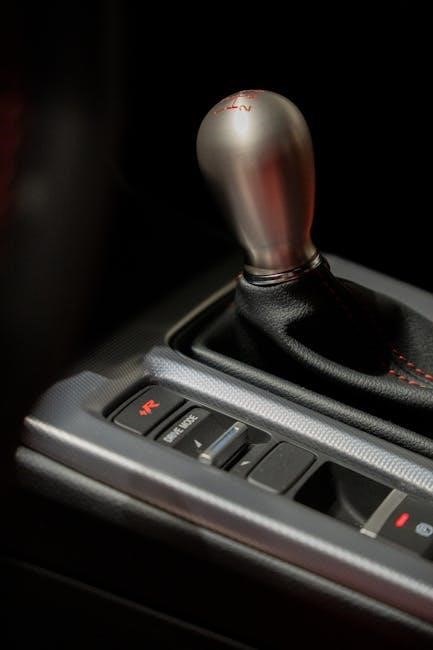
Maintenance and Troubleshooting
Regular fluid checks and changes are crucial for 6-speed manual transmissions. Common issues include difficult shifting and unusual noises, often indicating low fluid or internal wear.
Prompt attention to these symptoms can prevent costly repairs or complete transmission failure.
Common Issues and Symptoms
Identifying problems early with a 6-speed manual transmission can save significant repair costs. A frequently reported symptom is difficulty shifting into specific gears, often accompanied by a grinding noise. This usually indicates synchronizer wear or low transmission fluid.
Unusual noises, such as whining or clunking, can signal internal damage to the gears or bearings. Fluid leaks are another common issue, potentially leading to insufficient lubrication and accelerated wear.
A slipping clutch, though not directly a transmission problem, can mimic transmission issues and should be investigated. Finally, a stiff or notchy shift feel can point to worn shift linkages or internal components needing attention. Regular inspection and prompt diagnosis are key to maintaining optimal performance.
Fluid Changes and Inspection
Regular fluid changes are crucial for the longevity of a 6-speed manual transmission. Most manufacturers recommend changing the fluid every 30,000 to 60,000 miles, though severe driving conditions may necessitate more frequent intervals.
Inspection of the fluid itself is equally important. Healthy transmission fluid should be clear and have a slightly sweet smell. Dark, murky fluid or a burnt odor indicates contamination and potential internal wear.
Checking the fluid level is a simple process, typically involving a dipstick or fill plug. Ensure the transmission is at operating temperature before checking. Proper fluid type is vital; consult your vehicle’s owner’s manual for specifications. Neglecting fluid maintenance can lead to costly repairs.
Repair and Replacement Considerations
Repairing a 6-speed manual transmission can range from relatively simple fixes, like replacing worn synchronizers, to complete overhauls. Diagnosing the issue accurately is paramount. Common problems include difficulty shifting, grinding noises, and fluid leaks.
Consider the cost of repair versus replacement. A full rebuild can be expensive, potentially approaching the price of a new or remanufactured unit. Remanufactured transmissions offer a cost-effective alternative with a warranty.
Replacement might be necessary if the case is damaged or internal components are severely worn. Professional installation is highly recommended to ensure proper operation and avoid further damage. Always factor in labor costs when evaluating options.

The Future of Manual Transmissions
Despite the rise of automatics, manual transmissions, including 6-speeds, retain a dedicated following. Their future hinges on enthusiast demand and integration with evolving automotive technologies.
Trends in Automotive Technology
Modern automotive technology presents both challenges and opportunities for manual transmissions like the 6-speed. The increasing complexity of vehicle systems, including advanced driver-assistance systems (ADAS) and sophisticated engine management, requires careful integration with manual gearboxes.
Furthermore, the push for electrification and hybrid powertrains is influencing transmission design. While fully electric vehicles don’t require multi-speed transmissions, hybrid systems may benefit from them to optimize efficiency.
However, the demand for driver engagement and a more visceral connection to the vehicle continues to fuel the development of refined manual transmissions. Manufacturers like TREMEC are innovating to offer modern 6-speed options that cater to enthusiasts, ensuring the manual transmission remains a viable choice for performance-oriented drivers.
The Role of Manuals in a Changing Market
Despite the dominance of automatic transmissions, the 6-speed manual maintains a dedicated following in a shifting automotive landscape. While overall market share declines, manuals persist, particularly in sports cars and performance vehicles where driver involvement is prized.
Enthusiasts appreciate the control and engagement a manual offers, viewing it as a core element of the driving experience. This niche demand sustains production, albeit at lower volumes.
Manufacturers respond by offering manuals as premium options, often paired with high-performance engines. The 6-speed’s continued relevance hinges on catering to this passionate segment, ensuring its survival in an increasingly automated world.